
From Pasture To Plate
A Transparent Look Into Our Livestock Program
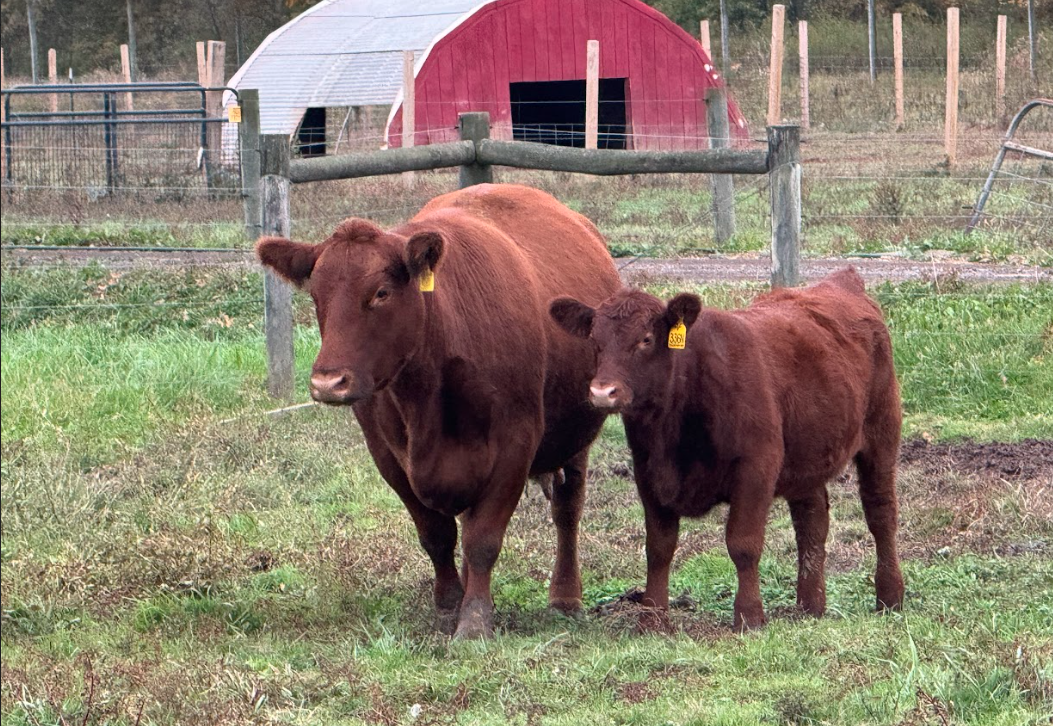
At Abma’s Farm, we believe that understanding where your food comes from should be simple, honest, and accessible. In a world overflowing with information (often misinformation) about how farming really works, transparency matters more than ever. That’s why I sat down with Farmer Jimmy, our fields manager and livestock manager at Abma’s Farm in Hillsborough, NJ, to walk through every detail of how we raise our livestock: Red and Black Angus cattle, pigs, and chickens. Our goal is to give our community a clear, firsthand look into our practices so you can make the choices that feel right for you and your family.
We are preparing for the winter season here at the farm and are offering our customers a Winter Meat CSA. An Abma's Farm Winter CSA is one of the best ways to keep your freezer stocked with high quality pasture-raised beef, pork, and chicken all season long.
Instead of purchasing a huge bulk order that requires a ton of freezer space, members enjoy 21-weeks of curated cuts sourced directly from our livestock in a manageable share.
Let's dig into the details about our operations with Farmer Jimmy...
Q: Abma's Farm has been a vegetable farm for generations. Why did we decide to add raising livestock to the mix?
Back in 2024 we expanded our operations in Hillsborough to Amwell Road. The farm we purchased was originally a livestock farm, so the setup for a was already there. We built our market and our petting zoo. We were already selling ground beef and pork that we bought in, but now we had all this space, pasture, and facilities. And... we just kind of always wanted to raise cows.
The commonsense reason of why we wanted to start raising livestock for meat is because we wanted to raise food in the most sustainable, most humane way. Diet, living conditions, these are all variables that we wanted to control. Raising animals in the best way possible to make the best meat possible.
Q: Why Red Angus cows? What does Red Angus Certified mean?
eOriginally, we started with Black Angus because they're great beef quality. Over time though, we decided to shift toward Red Angus. The quality is the same, but their temperament is calmer - they have a calmer demeanor.
We're now New Jersey's only registered Red Angus closed herd. By having our cows registered, we can follow the genetic lines and breed in specific qualities. Straight back, good feet, strong nursing, udder and nipple size - these are all animal traits that, just like in humans, you can breed in or out of your herd.
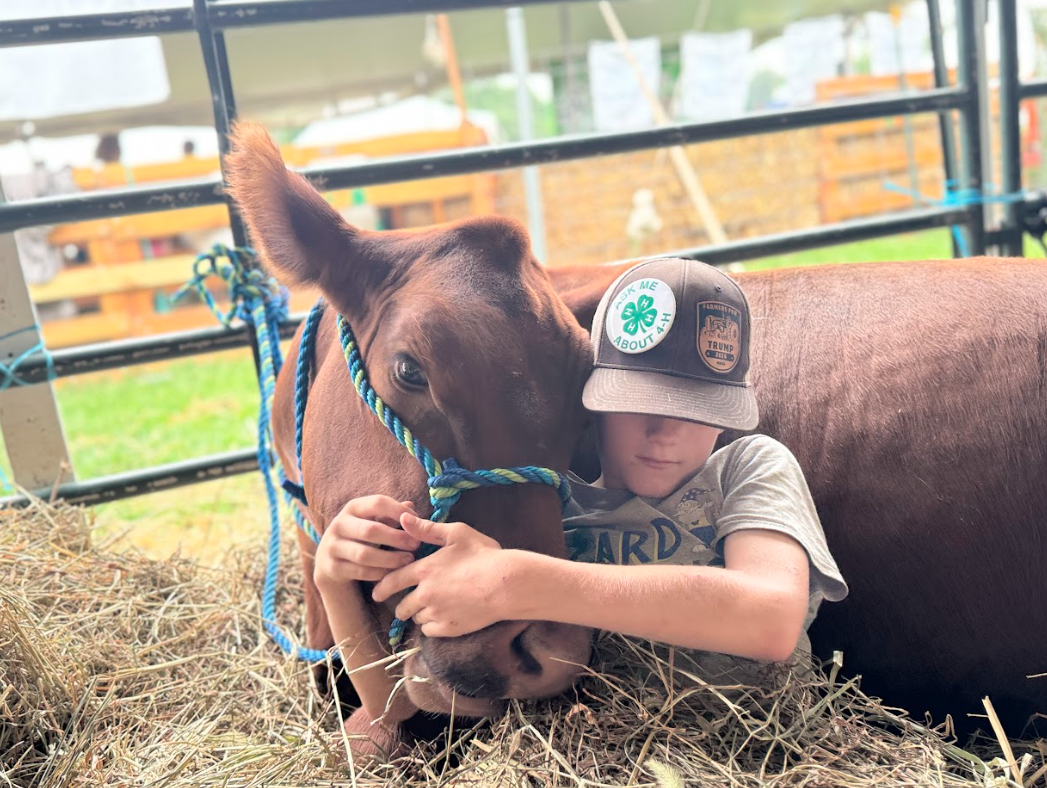
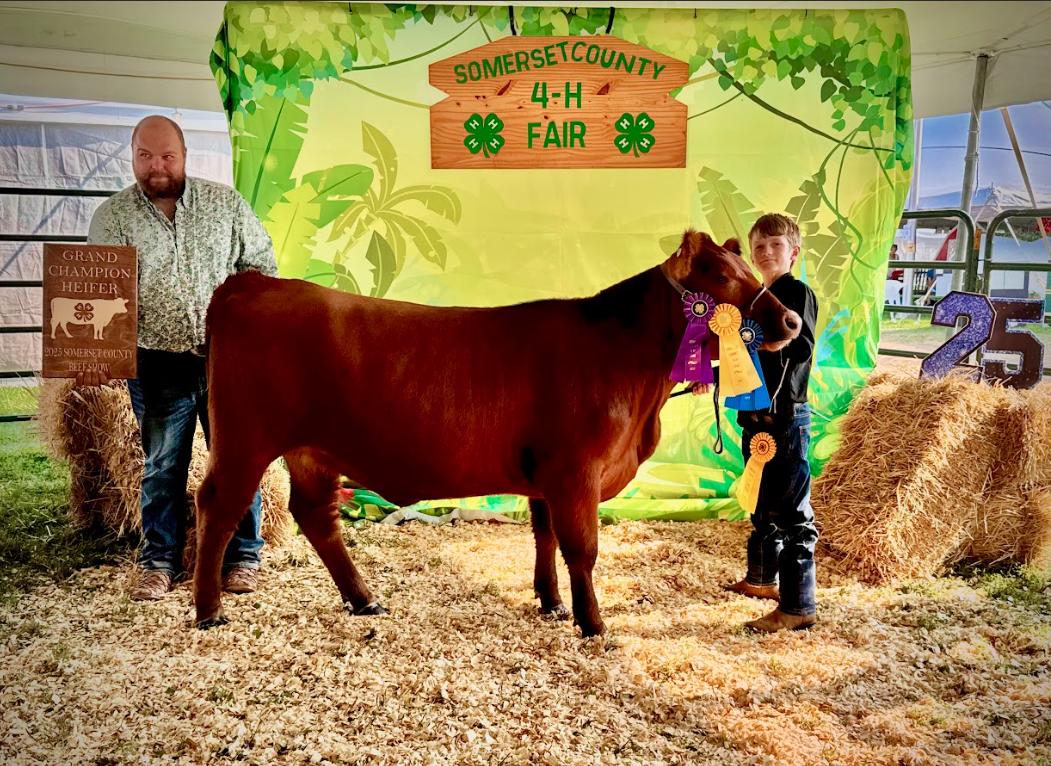
Being part of the Red Angus Association also lets us enter our own cattle into major shows, something our kids do with the 4-H program. There aren't many Red Angus breeders nationwide so it's a niche we're proud to represent. There's plenty of Black Angus out there, planty of Herefords, but Red Angus is pretty special.
Q: What does daily care look like?
We put our heart and soul into the level of care for our animals, and we have their care mapped out.
Generally speaking, there's two types of care, summer and winter.
During the summer, our cows and pigs are all out to pasture. We practice rotational grazing across 10 different fields. Every week or so, we move the herd to a fresh pasture so the grass can regenerate and the cows always have fresh forage. Get a real dry year, like we had this year, we'll just take a couple of round bales and roll them out there for the cows to eat. All our pens have automatic waters on them. They have full access to the water, hay, and grass pretty much 24/7 as they please.
In the summer we also make and feed our cows baleage, which consists of sudex grass, peas, and oats, which we bale up wet to create a higher moisture content which holds in the nutrients and proteins better for the feed.
In the winter when the ground freezes, we move our cows into the barnyard. The barnyard is a roofed area with an open outdoor run so they can choose where they want to be, inside or outside. The shelter has wind blocks, sort of like curtains on each side, to block harsh wind and weather but keep the free-flowing air going. There's about 2 acres of space around the barnyard of open space as well. By nature, cows will want to stay outside. They grow their winter coats and are quite comfortable. Snow on a cow means their coat is so well insulated that heat is not escaping and melting the snow - like the roof of a house in winter.
Year round, our animals have unlimited access to a mineral feeder. Cows will regulate themselves if they need extra minerals by chewing on the feeder.
Q: What about pigs and chickens? How are they raised?
Our pigs are pasture-raised too. They root for grubs and graze grass, and we supplement with a corn and soybean meal diet. We watch their intake closely because pigs can overeat and grow too fast.
We raise chickens with both pasture and barnyard to supplement their needs. Raising chickens has been a family tradition for decades, so it just made sense to continue that tradition from Wyckoff to Hillsborough.
Q: What does maternal and baby care look like?
Pregnant cows and pigs get a lot of focused attention because healthy mothers lead to healthy babies. During gestation, they stay on the same rotational grazing program as the rest of the herd, which keeps them moving, eating fresh grass, and staying strong. We also monitor their body condition closely and adjust to their diet if needed.
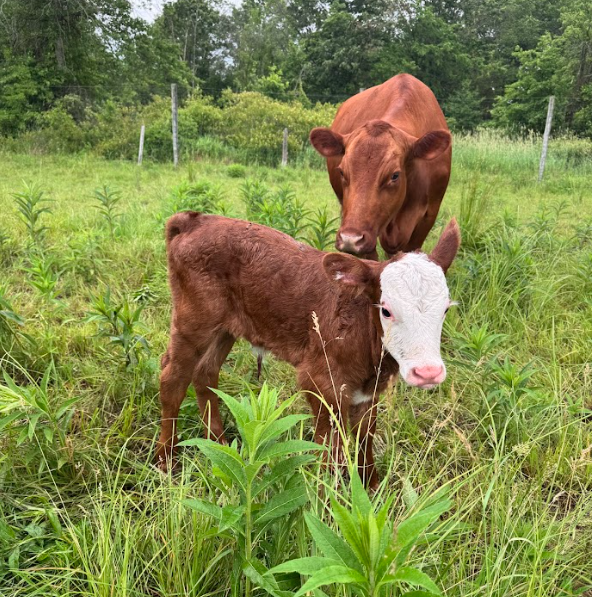
Red Angus are known for easy calving and strong maternal instincts, which makes the process smoother, but we still stay alert for any cow that may need help. Once the calf is born, we make sure it’s nursing well and that mom is recovering properly. Each calf typically nurses for about 6-7 months or until roughly 600 pounds, depending on the mother. We try to keep everything as natural and low-stress as possible.
We move pregnant sows into the farrowing barn to keep a close eye on them. Pigs can have large litters, so making sure mom is comfortable and the piglets are nursing well is the priority. Once the piglets are stable and growing, they gradually transition back to the rest of the herd, where they root, graze, and socialize naturally. Just like with our cows, we focus on low stress, proper nutrition, and clean conditions.
Q: How do you handle animal health, safety, and temperament?
The health of our animals is most important. That means we need to perform vet checks routinely. Our herd is handled often, which means they’re calm around people, equipment, trailers, and the chute system. A cow that’s been isolated on pasture his whole life would be wild and stressed in those situations, but ours are used to the routine.
We do spring vaccinations for respiratory diseases, routine veterinary checks, annual hoof care, and pregnancy checks.
Our herd is "closed", meaning we don't allow other animals in that could be potentially carrying disease.
Q: How is this style of small operation differ from large industry?
So if you look at the big scale beef industry, there's different stages. You have the “grass fed” folks who raise their livestock start to finish. That’s us. Then you have the big commercial guys who do cow calf operations: once a calf weans, they go into a feedlot scenario, then get finished by a different grower, and then transported from there to the processor. We're a complete cow, calf, calving to finishing operation, where we raise all of ours from breeding to birthing to weaning to finishing, and then we have a 45-minute drive to our processor.
Ultimately, what does that mean? Less stress. Less stress for the animals because they are living their lives on the same farm, with the same humans and the same other cows. There’s no travel time except from going to one pasture to another, sometimes trailered a few roads over. They're very relaxed.
Q: How does this style of raising livestock help the environment?
Cows improve pasture when managed correctly. Their manure is nutrient-dense, and their hooves help press those nutrients into the soil. Cows also tear grass instead of pulling it up by the roots, which supports regrowth.
We follow a regenerative cycle to grow grass and grain for our animals including double cropping peas, oats, and sudex after sweet corn which in turn improves soil health and growing winter cover crops like rye and wheat for baleage.
There's very minimal waste and the whole system basically feeds itself when you do it right.
Q: Let's talk about the meat itself. How is it processed?
We don't process the meat ourselves. Our current facilitators are Nello's and Lehigh, both located in eastern Pennsylvania. Both are USDA certified packing houses.
Our animals are transported 45 minutes, much shorter and less stressful than other large-scale operations. They are harvested, hung to dry age for 10 days, then cut and flash frozen to preserve the freshness and nutrients.
We choose to flash freeze our meats because when meat is processed and sold fresh, you have a very limited time before the meat spoils. Plus, fresh meat quickly loses it’s nutrients. Our flash frozen meats have a roughly 18-month shelf life.
Q: What makes Abma's Farm meats different from the grocery store?
Besides all the close care I spoke about, it's the processing and packaging.
Large commercial operations add preservatives, binders, and food coloring additives for the presentation of their meat. For example, ground beef is not supposed to be that nice, bright pink-reddish color: that’s coloring added to it. And, the consistency has a binder added to it (makes it look like spaghetti). If you look at our ground beef that has been flash frozen, it’s browner than pink. And the consistency is a natural crumbliness because we don’t add preservatives or binders.
When is comes to our pork, we make sure our meat is “uncured”, which really means it’s cured but with celery salt instead of nitrates.
Q: What makes your winter meat CSA special?
A full share of meat represents about half a cow, a pig, and 12 chickens. But instead of handing you 300 lbs all at once, we spread it out over 21 weekly pickups. You don't need massive storage; you don't need all the items to overwhelm you.
We have a bi-weekly processing schedule so your CSA meat is extremely fresh. We build a schedule based on essential cuts, full animal harvest, seasonal needs, and variety. For example, we'll include more roasts in winter and fewer grilling items.
We guarantee our high level of care for our animals, and you in turn know where your food comes from: how it’s raised, who made it, who processed it, and how. We guarantee the genetics and quality of the animal.
Q: Why is it especially meaningful for our customers in New Jersey?
These are densely populated areas. Families don’t often get to see how their food is raised. Our customers can actually come visit our Hillsborough location where they could see the animals and the quality of care. Ask our farm team questions and they will happily answer.
Transparency is important. We want people to really understand the process, especially since there’s so much misinformation online.
Q: What would you say to someone considering joining our meat CSA program?
As much as it can be an uncomfortable conversation sometimes, it’s very important for us to show our community exactly what we do so they can get a deeper connection and understanding of their food.
We’re raising this meat to sustain our family, your family, and our community. If you value knowing where your food comes from, how it’s treated, what goes into it- then this CSA is for you. We guarantee genetics, care, and quality. And we’re right here. You can see the animals for yourself. You can’t get that from a grocery store.
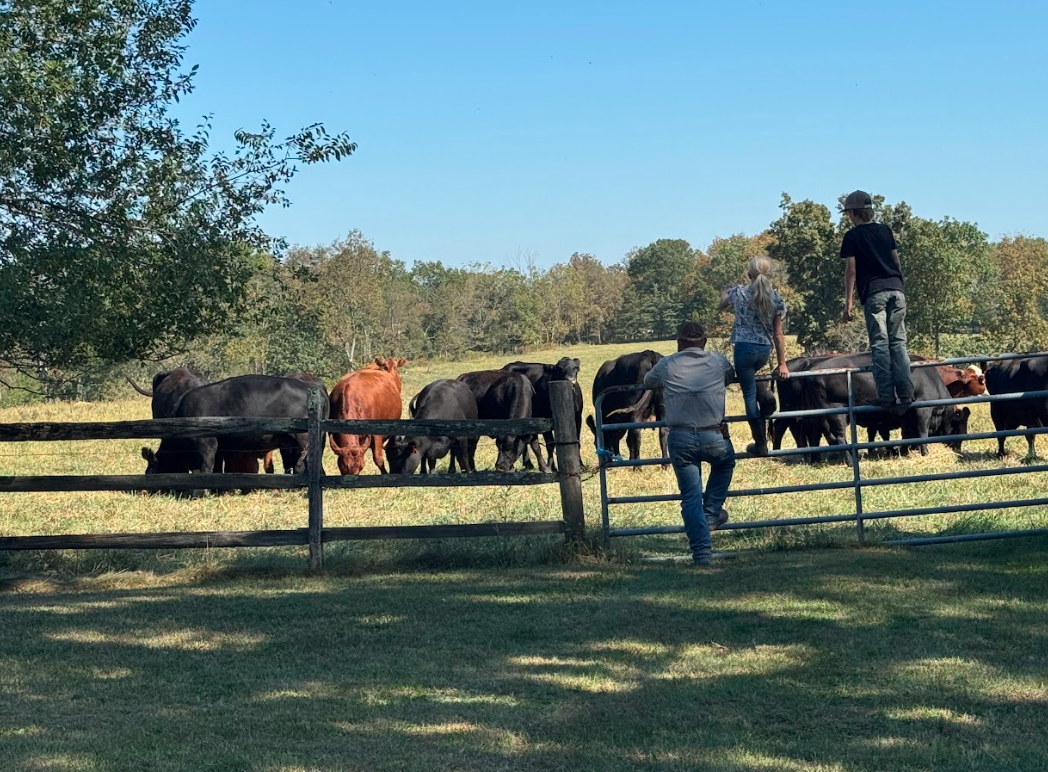
Thank you, Farmer Jimmy!
Farming is a partnership between us, our community, and the land. Here at Abma's Farm we value that partnership wholeheartedly. By choosing to eat local and supporting sustainable agricultural practices and humane livestock raising, you're investing in a food system that values honesty, quality, and community.
We hope this behind the scenes look with Farmer Jimmy helps you feel more connected to how your food is grown.
If you're looking for a reliable, sustainable, and meaningful way to feed your family through the winter and spring months, our meat CSA is for you.
Become a CSA member today: learn more by clicking here!
With gratitude,
Valerie Abma & the Abma Family